Friday, July 29, 2011

Birding Bombay Hook NWR..Part II

My post for this weeks  Friday Ark   and Camera Critters I have some more birds from my last visit to Bombay Hook NWR. This post and birding list includes the Black-Necked Stilt, Great Egrets, Snowy Egrets, Great Blue Herons, Ibis and what I believe are a Caspian Tern (or is it a Common Tern) adult with a juvie. Also, near the Finnis Pool we saw lots of turtles.

The Black-necked Stilt is a breeding bird at Bombay Hook. So, in the summer months you can almost always see them at the refuge.  They have long slender legs and black and white plumage. They forage by picking prey with their long thin bills.


We watched this juvie tern being fed by the adult. What a cute sight.


Only certain Terns have orange bills and checking out my field guide I see that the Caspian and the Royal Terns have the orange bill. I really had to crop the juvie tern photo and it is fuzzy but I see that the juvie also has an orange bill.  To narrow it down some more the Caspian Tern has black on the tip of its bill. So now I am sure the Tern I saw at Bombay Hook is the Caspian Tern. What do you think?

Edit: I am still not sure of the id's on these Terns. If anyone can help it would be appreciated.


At the time I was birding at the Bombay Hook refuge a White-Faced Ibis was being reported seen.  I saw a flock of Glossy Ibis a distance away and two Ibis that were closer, below is a photo of one of the two I saw. Again, all these birds were too far away for the zoom on my camera but I cropped it closer hoping to be able to id this bird. Now, whether it is the White-faced Ibis or the Glossy Ibis I am not positive because of the fuzziness of my photo. I saw my first White-faced Ibis in Idaho, so it would not be a lifer if it was the White-faced Ibis. I believe they are more rare of a sighting than the usual Glossy Ibis seen in this area.


During the summer months you can be sure to see the Great Egret, Snowy Egret and Great Blue Herons.

I always love seeing the Egrets in the tree and I like how this photo turned out. It was a hot humid day and even the birds looked tired of the heat.


Below, two Great Egrets and a Great Blue Heron.


We usually always see turtles in the Finnis Pool.


To see more beautiful birds and critters check out Friday Ark   and   Camera Critters.  Thanks to the host of  Friday Ark and to Misty Dawn of Camera Critters. I hope you enjoyed my birds of Bombay Hook and thanks for stopping by for a visit. I hope everyone has a great weekend and try to stay cool, I heard it is going to be a hot and humid weekend.

Tuesday, July 26, 2011

American Avocets

This is my post for World Bird Wednesday  and Nature Notes


Below, the taller Avocets mixed in with a few other shorebirds.


This past Saturday, hubby and I visited Bombay Hook NWR. I was hoping to see some shorebirds migrating thru. I was reading my Delaware Birding Trail map and it mentioned migration starts in July and peaks in August. I have to say I love the Delaware Birding trail map. It list all the birding hotspots and it list where you can find certain birds also has a map and directions. It would be cool if every state had their own birding trail map.


There are actually two birds seen at Bombay Hook NWR that made the trip worthwhile for me. The American Avocets and the Black Necked Stilt, they are usually seen at Bombay Hook in the summer months.

Below, that American Avocets are resting. It was very hot and humid on Saturday.


American Avocets...Bombay Hook. The breeding male has a burned orangy head and neck. They search for insect larvae by sweeping their bill along the waters surface. Also, their bill is slightly curved.


Sorry, I will have to learn to keep my hand steady,  my youtube Avocet video. But, I like how the video catches the avocets sweeping the waters surface with their bills. A Glossy Ibis is also seen walking along in the water.


We also saw a Bald Eagle, Terns, Willets, Dowitchers, Sandpipers, Yellowlegs, Plovers, Snowy Egrets, Great Egrets, GB Heron and Glossy Ibis. We also made quick stops at Woodland Beach and Port Mahon.

To see more wonderful bird please check out Springman's World Bird Wednesday and more great nature post at Michelle's Nature Notes. Thanks to Springman and Michelle for hosting and thanks for stopping by to see my post and birds.


Sunday, July 24, 2011

Backyard blooms and birds

I am linking up my post with Mosaic Monday  and  That's My World.  These are some of the flowers blooming in my yard right now and a couple of my yardbirds...the Mourning Dove and the Ruby Throated Hummingbird. Most of our flowers were planted with the hopes of attracting more wildlife like the  birds and butterflies to our yard.

Below,  butterfly bushes, crepe myrtle, trumpet vine and a Ruby Throated Hummingbird.


The Mourning Dove is another year round bird and a regular visitor to my yard. They spook easily and sometimes it is hard to get a good photo of them.


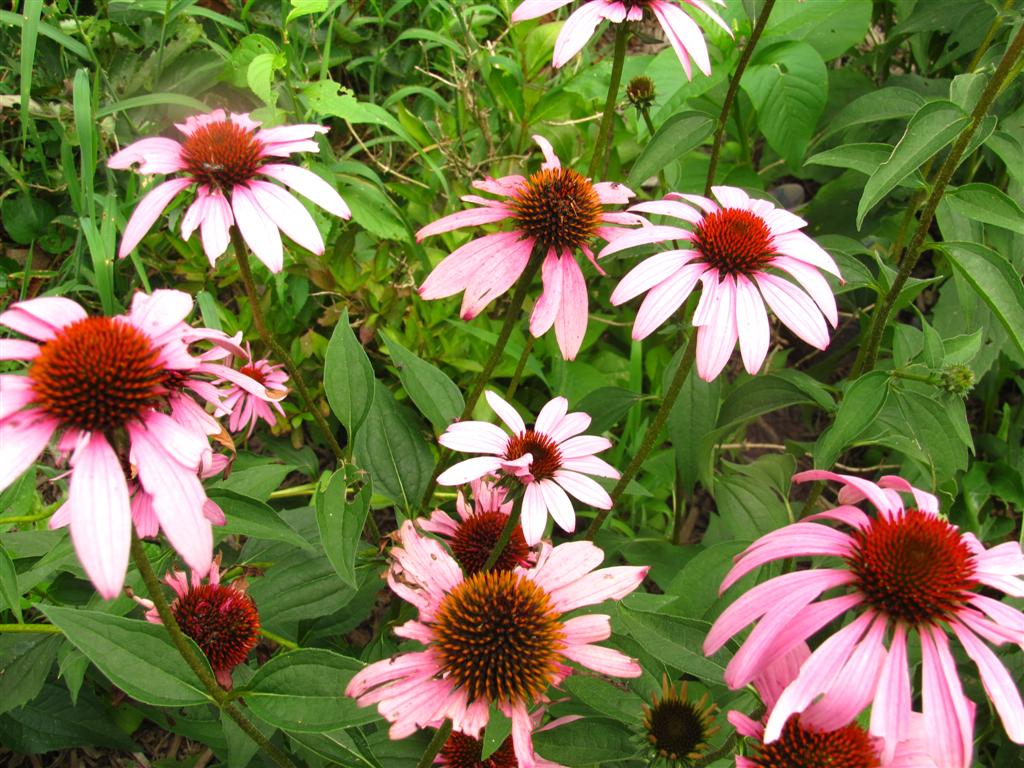
Below, Purple coneflowers and Maryland's state flower the Black Eyed Susan and my sweet looking Mourning Dove.


Black  Eyed Susan's, Maryland State flower.


Over the years hubby has planted many flowers, he has the green thumb and I just help to choose plants and bushes with the wildlife in mind. The butterfly bushes attract the butterflies and the trumpet vine is a favorite of the hummingbirds.


I just love to see the hummingbirds in my yard, this male like to take control of all my feeders and the flowers.


To see more wonderful mosaics and photos please visit Mary's Mosaic Monday and That's My World.. Thanks to Mary for hosting Mosaic Monday and to the gang at That's My World: Sylvia, Wren, Sandy and Klaus.  Also, thanks for stopping by my post and blog. I hope everyone has a wonderful week and try to stay cool during these HOT days.

Friday, July 22, 2011

Goldfinches & Sunflowers

I am linking up my Goldfinch post  to the Friday Ark and Camera Critters  Both are great memes for the animal and bird lover. The American Goldfinch is a year round bird for me.  The male Goldfinch is a beautiful bird, such a pretty bright yellow in the summer months. The female is pretty but a much duller color. They have such a sweet sound, I love to hear them in my yard.


Watching and feeding my yardbirds is one of my favorite things to do. The sunflowers growing in my yard are from the birds dropping the seeds. They love the Black Oiled Sunflower Seeds also known as BOSS. And now it is a treat to see the birds pecking at and eating the seeds on my sunflowers.


On this day I was able to catch the American Goldfinch perched on top of the sunflower and chowing down.


I like to leave the flowers in our yard even after they are past their beautiful flowering stage because I know the birds like to eat the seeds from the dead flowers. The Coneflowers are another flower popular with the birds in the fall time. In a small way it helps me to cut back on my bird seed purchases, if the birds are eating the seeds from my flowers.

I chose to plant coneflowers in our yard because I read that the birds love the eat the seeds in the fall.


To see more wonderful birds and critters please visit the Friday Ark and Camera Critters.  Thanks to the host of the Friday Ark and to Misty Dawn of Camera Critters. Thanks also for visiting my post and blog. I always enjoy your comments. I hope you all have a great weekend and try to stay cool. It's HOT out there.


Tuesday, July 19, 2011

Bermuda's White-tailed Tropicbird

My lifer the White-tailed Tropicbird is my post for World Bird Wednesday  and Nature Notes

During my short stay in Bermuda I was able to pick up one lifer..it was the White-tailed Tropicbird. It is also known as Bermuda's bird. The White-tailed tropicbird  is seen on Bermuda quarter and nickel.
In Bermuda it is locally known as the long-tailed tropicbird. It was a common bird seen all over Bermuda.  I thought it was a beautiful bird white it's long white tail feathers.


 Horseshoe Beach was the one place I was really able to watch them. They would fly all around the beach and ocean just like seagulls. It was neat to see them land on the rocky cliffs. They are known to lay one single egg on the ground or on a cliffs edge.


Below I was able to watch the Tropicbird flying into a small crevice on the cliff.


They disperse widely across the oceans when they are not breeding. The adult is a slender white bird with long white tail feathers. It feeds on fish and squid by surface plunging.

To see more wonderful bird visit Springman's World Bird Wednesday  and visit Michelle's Nature Notes.  Thanks to Springman and Michelle for hosting these fun memes.  Also thanks for visiting my post. I hope the rest of your week is great.  Happy Birding!!!!

Happy Monday!

Wishing everyone a great day and a happy new week! "Loose yourself in nature and find peace" Ralph Waldo Emerson "In all thin...